1990s Vintage Fashion: How to Style the Decade Today

1990s vintage fashion is remembered for its confidence without fuss. Relaxed denim, simple knitwear, practical jackets and clean tailoring made the decade distinctive, but the most useful ideas still feel relevant today.
RMAR Vintage Limited is a London-based online vintage shop curating pre-owned clothing and distinctive vintage finds for customers across the UK and worldwide through eBay. This guide looks at how to take inspiration from 1990s style without turning an outfit into costume.
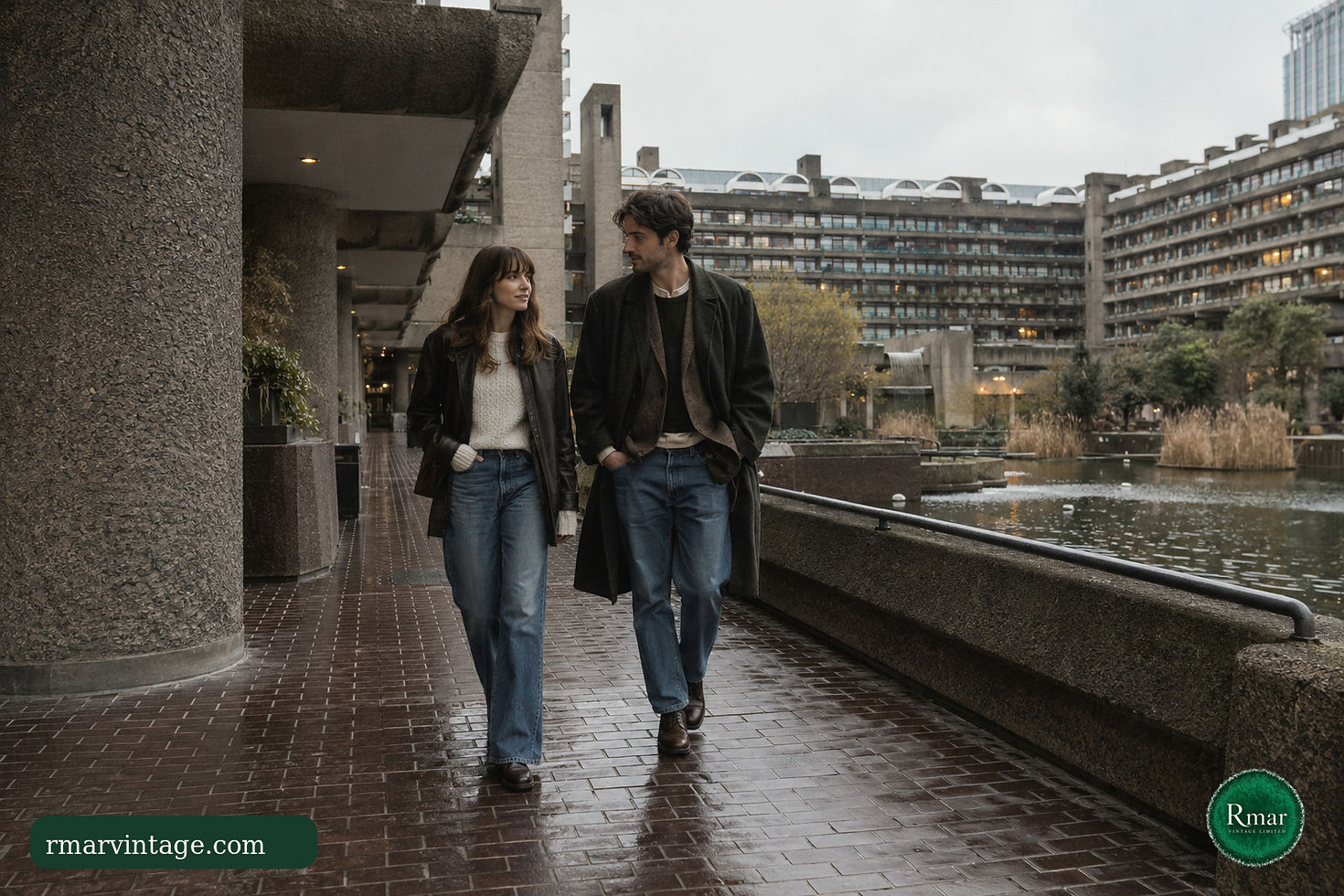
Relaxed denim, knitwear and dark outerwear create an easy 1990s-inspired London look.
What Defines 1990s Vintage Fashion?
There was no single uniform for the 1990s. Minimal tailoring sat alongside workwear, grunge-influenced layers, sportswear and polished evening pieces. What connected many of the decade's strongest looks was a sense of ease.
Silhouettes often had room to move. Jackets could be slightly oversized, trousers sat naturally through the leg and everyday outfits relied on a small number of useful layers. Colours ranged from black, charcoal and cream to denim blue, forest green, burgundy and earthy brown.
The best way to wear the decade now is to choose one or two recognisable ideas and combine them with clothing you already own.
Begin With Relaxed Denim
Denim is one of the simplest starting points for a 1990s-inspired wardrobe. Straight-leg or gently relaxed jeans work well because they create the decade's unfussy silhouette without demanding a complete change of style.
A denim jacket can be equally useful. Try it over a plain T-shirt, a fine knit or a simple shirt, then keep the rest of the outfit quiet. Double denim can work too, especially when the shades are noticeably different or separated by a neutral layer.
When buying vintage denim online, measurements matter more than the number on the label. Compare the waist, rise, inside leg and overall length with jeans that already fit you. For jackets, check the pit-to-pit measurement, shoulder width and sleeve length.
Simple layers allow the texture and shape of vintage denim to do the work.
Build Simple, Useful Layers
A practical 1990s outfit often begins with familiar pieces: a plain T-shirt, a knitted jumper, an overshirt or a cardigan. The interest comes from proportion and texture rather than a large number of colours.
Try a cream knit beneath a dark leather jacket, or wear a checked overshirt open over a plain top. If the outer layer is loose, a neater base layer helps the outfit remain balanced. If the knitwear is generous, straighter trousers can provide structure.
Layering also makes vintage clothing easier to wear across changing weather. A useful piece should earn its place in several outfits, not only reproduce one period-specific look.
Use Tailoring Without Making It Formal
Relaxed blazers and long coats were central to many 1990s looks. Today, they are easiest to wear when the rest of the outfit is simple.
A softly structured blazer can sit over denim and knitwear rather than a matching suit. A long camel or charcoal coat can add a clean vertical line to trousers, jeans or a slip dress. The goal is not exaggerated shoulders or extreme proportions; it is a slightly relaxed shape that still feels considered.
Check the shoulder line carefully when buying vintage tailoring online. A little extra room can look intentional, but a jacket that collapses beyond the natural shoulder may be difficult to balance. Sleeve length, button position and overall length are equally important.
Let Texture Replace Loud Branding
The decade's quieter outfits often relied on material rather than visible branding. Denim, leather, wool, corduroy, satin and brushed cotton each add a different surface to a simple colour palette.
This makes pre-owned clothing especially rewarding. Gentle fading, softened denim or natural creasing in leather can give an outfit depth, provided the condition is shown and described honestly.
Look closely at cuffs, underarms, pocket edges, hems, linings and fastenings. Character and damage are not the same thing. Clear photographs and accurate descriptions should make it possible to understand how a piece has aged before buying.
Construction, stitching and fabric condition help reveal how a vintage garment will wear.
Choose Accessories With Restraint
Accessories can establish a 1990s mood without overwhelming the outfit. A slim leather belt, simple ankle boots, a small shoulder bag or a softly folded scarf can be enough.
Keep shapes clean and repeat colours already present in the clothing. Black shoes can connect with a dark coat; brown leather can soften denim and cream knitwear. If the outfit already includes checks or a strong texture, plain accessories usually give it more room to breathe.
Buying 1990s Vintage Clothing Online
Vintage sizing varies, and labels do not always reflect modern expectations. Use measurements as your main guide and consider the garment's intended shape.
Before purchasing, check:
Pit-to-pit, shoulders, sleeves and overall length for tops and jackets.
Waist, rise, hips, inside leg and hem width for trousers and jeans.
Front, back, lining, fastenings and areas of natural wear in the photographs.
Fabric composition and care information where it is available.
Whether the piece works with at least two or three items you already own.
A thoughtful choice is more likely to become a regular part of your wardrobe. That is where vintage clothing is most valuable: not as a short-lived trend, but as something distinctive that continues to be worn.
Discover Vintage Clothing From London to the World
RMAR Vintage Limited operates online from London, serving customers across the UK and worldwide through its official eBay shop. Explore pre-owned clothing and vintage finds with clear photographs and useful information.


Comments