
How to Care for Vintage Velvet Without Crushing the Pile

Vintage velvet has a depth and softness that modern styling can make feel instantly luxurious, but the same raised surface that catches the light also needs thoughtful care. Pressing, rubbing or packing it tightly can flatten the pile and leave shiny patches. This practical guide explains how to handle vintage velvet gently, from the first condition check to long-term storage.
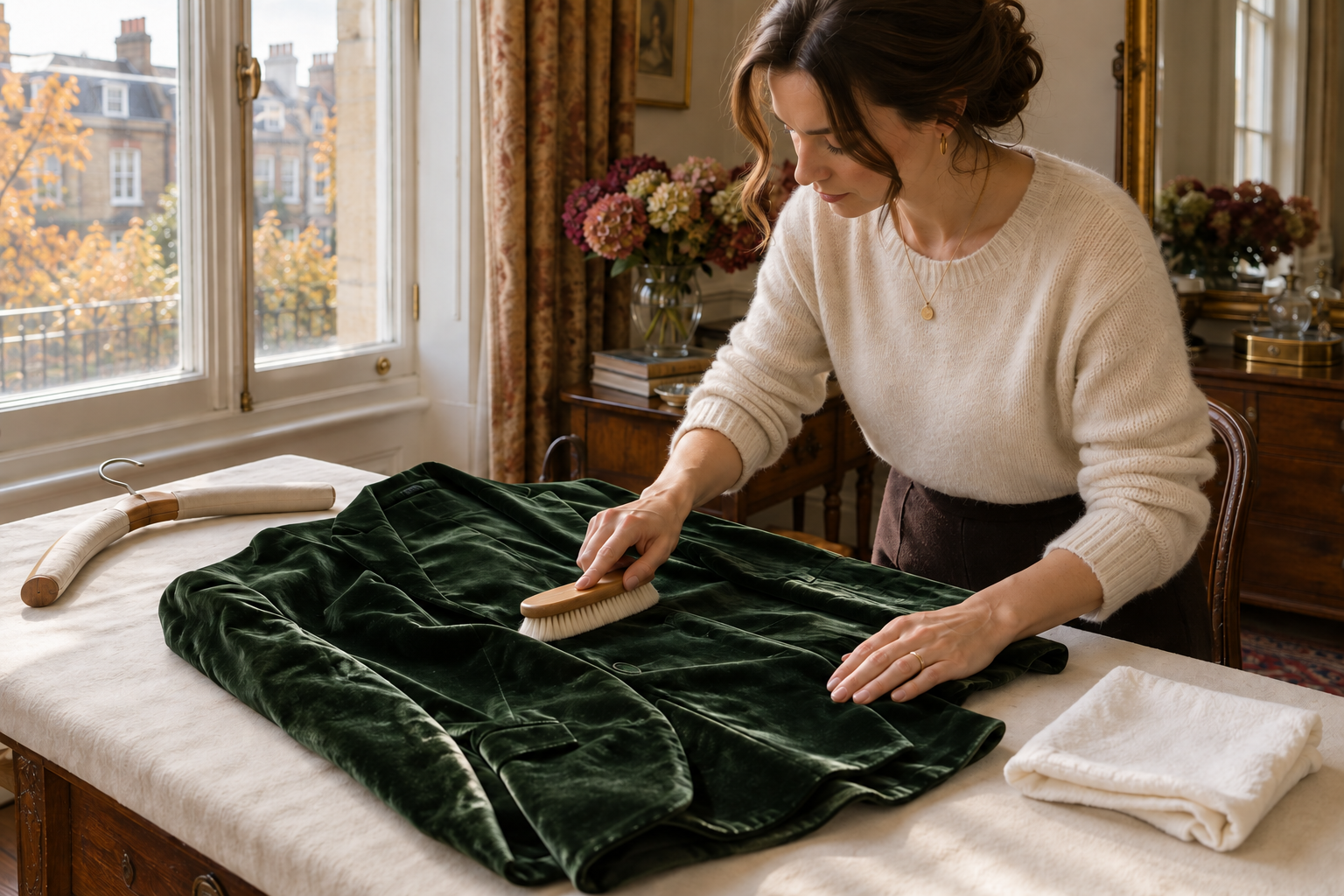
Editorial illustration: gently brushing a velvet jacket in the direction of the pile.
Understand the velvet pile before cleaning
Velvet is defined by its pile: short, upright fibres that create its distinctive texture and shifting colour. When those fibres are pushed in different directions, the surface can look lighter, darker or temporarily marked. That change is not always damage, but aggressive treatment can make it permanent.
Find the direction of the pile
Lay the garment flat on a clean, padded surface and pass your fingertips lightly over an inconspicuous area. One direction should feel smoother and look more even. Note that direction before brushing, steaming or blotting, because working consistently with the pile is gentler than scrubbing across it.
Start with the care label and a condition check
Read any surviving care label, but remember that an older label describes the garment when it was new. Age, previous cleaning and repairs may have changed how safely it can be treated. Check seams, fastenings, linings, embellishment and worn areas before doing anything.
If the fibre content is unknown, the colour transfers to a white cloth, the pile is already shedding, or the garment has beadwork or a delicate lining, a cleaner experienced with vintage clothing is the safer choice. Avoid guessing at a wash method.
Remove surface dust gently
Dust can settle between the fibres and dull the surface. Hang a structurally sound garment on a padded hanger, or support it flat if the shoulders are fragile. Use a clean clothes brush or a very soft lint brush and make short, light strokes in the direction of the pile.
Avoid sticky lint rollers on fragile velvet, as strong adhesive can pull at loose fibres. A vacuum cleaner should not touch the fabric; even low suction can distort weak areas unless a conservation screen and specialist technique are used.
Treat small marks without rubbing
Rubbing is the quickest way to bruise velvet. For a fresh water-based mark, blot from the outside towards the centre with a clean, colourfast cloth. Lift moisture rather than pushing it into the pile. Do not flood the area, and never apply stain remover before testing it on a hidden part of the garment.
Know when to stop
Oil, make-up, old stains, dye transfer and unknown residues usually need professional assessment. Repeated home treatment can set a mark, create a tide line or remove colour. It is better to pause with a visible but stable stain than to turn it into permanent pile damage.
Steam velvet without flattening it
Direct ironing can crush velvet and leave a shiny imprint. If steaming is permitted by the care label and a hidden-area test is successful, hang the garment with room around it. Hold the steamer away from the surface, use brief passes and let the steam relax the fibres rather than soaking them.
For creased areas, steam from the reverse where construction allows, then lightly encourage the pile with a soft brush once the fabric is cool and nearly dry. Never press the garment between the iron and a hard board.
Dry and reshape with patience
Keep damp velvet away from radiators, tumble dryers and direct sunlight. Support its weight, smooth seams without pressure and allow it to dry naturally with good air circulation. Do not wear or fold it while the pile is still damp, because pressure marks form more easily at that stage.
Store velvet so the pile can breathe
Use a broad, padded hanger for a sound jacket or dress, and give the garment space so neighbouring clothes do not compress it. A breathable cotton cover protects from dust without trapping moisture. Avoid thin wire hangers, plastic bags and overfilled rails.
If a fragile piece must be stored flat, pad the folds with acid-free tissue and place it where heavier garments cannot rest on top. Revisit the folds occasionally rather than leaving the same areas under pressure for months.
What to check when buying vintage velvet online
Good photographs should show the fabric in more than one light. Look for flattened patches, persistent shine, worn cuffs, colour change at shoulders, crushed seams and marks near hems or underarms. A change in tone can be the natural direction of the pile, so ask whether the surface lifts when gently brushed.
For more considered pre-owned pieces, browse RMAR Vintage collections. You can also visit RMAR Vintage on eBay for another view of available listings and photographs.
Style velvet without overworking it
Let velvet provide the main texture. A velvet jacket can sit comfortably with a plain cotton shirt and tailored trousers; a velvet skirt can be balanced with a fine knit and simple footwear. Keeping the supporting pieces quieter makes vintage texture look intentional rather than costume-like.
Keep older velvet wearable for longer
The best velvet care is low-intervention care: air after wear, brush only when needed, treat moisture promptly and store without pressure. Small, careful habits protect the pile and reduce the need for aggressive cleaning, helping a vintage garment retain its character while still fitting naturally into a modern wardrobe.


Comments