
How to Choose a Vintage Coat Online: Fit, Fabric and Condition

A good vintage coat can become one of the hardest-working pieces in a wardrobe. It adds shape, texture and character, but buying one online requires more than choosing a colour you like. Measurements, construction, condition and the clothes you plan to wear underneath all affect whether a coat will work for you.
RMAR Vintage Limited is a London-based online vintage shop curating pre-owned clothing and distinctive vintage finds for customers across the UK and worldwide through eBay. This practical guide explains what to check before choosing a vintage coat online.

Decide How You Want to Wear the Coat
Before looking at measurements, think about the coat’s job. A light coat worn over a shirt needs less room than an outer layer intended for substantial knitwear. A smarter coat may benefit from a cleaner shoulder line, while a relaxed everyday style can accommodate more volume.
Consider where the hem should fall, whether you need easy movement and which colours already dominate your wardrobe. This narrows the search and helps you judge each coat against a real purpose rather than an idealised photograph.
Use Measurements, Not Only the Size Label
Vintage sizing can differ from modern expectations, and labels may reflect another country, era or intended fit. Compare the listing measurements with a coat you already own and enjoy wearing.
Pit to pit helps indicate room through the chest.
Shoulder to shoulder suggests where the main structure may sit.
Overall length shows where the coat may finish on the body.
Sleeve length helps you compare cuff position.
Hem width can be useful for straighter or more fitted shapes.
Measure your comparison coat laid flat in the same way. Body measurements alone do not include the wearing ease and layering room built into an outer garment.
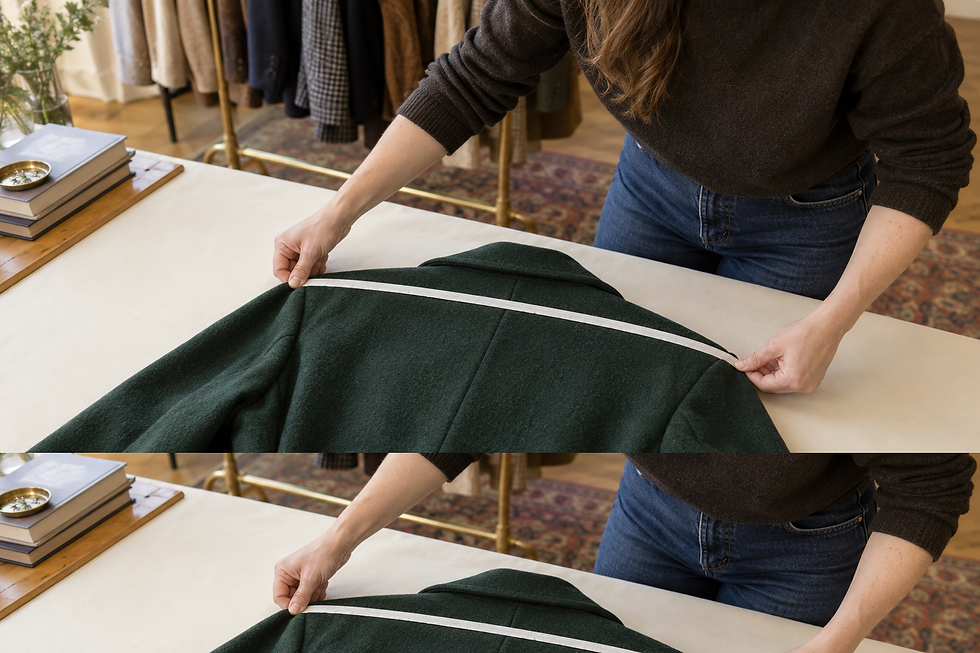
Pay Close Attention to the Shoulders
The shoulder area influences the whole silhouette. Structured coats may have padding or a defined seam, while raglan and dropped-shoulder designs are naturally more forgiving.
Compare the shoulder measurement, but also study the cut. Two coats with the same width can sit differently if one is sharply tailored and the other is soft and relaxed. Photographs from the front and back help reveal whether the shoulders are square, sloped or deliberately oversized.
Check Length and Sleeve Proportion
A coat’s length changes both its appearance and practicality. Shorter styles can feel easy for everyday movement, while longer coats provide a stronger vertical line. The right choice depends on your height, preferred proportions and the outfits you plan to wear.
Sleeves should also be considered alongside the shoulder construction. A wider or dropped shoulder can make the effective sleeve longer, even when the sleeve measurement itself seems familiar.
Look at Fabric, Weight and Drape
Photographs can suggest whether a coat is crisp, soft, substantial or fluid, but read the description carefully for any confirmed fabric information. Do not assume a material from appearance alone.
A heavier fabric may create a more structured outline and require a sturdy hanger for storage. A lighter coat may layer more easily across seasons. Close-up images can help show the surface texture, weave and natural signs of previous wear.
Inspect the Lining and Construction
The inside of a coat matters because it experiences regular friction from clothing underneath. Look for clear views of the lining, armholes, inside pockets and lower hem where possible.
Check whether seams appear secure and lie flat.
Look around pockets for stretching or opening stitches.
Review cuffs and sleeve lining for wear.
Inspect vents, pleats and the lower lining.
Note any repairs and whether they affect use or appearance.
Review Buttons, Zips and Other Fastenings
Fastenings influence how a coat sits when closed. Check that buttons are present, zips are described clearly and any belts, buckles, hooks or press studs shown in the listing are accounted for.
A replacement button does not necessarily make a coat less wearable, but it should be visible or described. What matters most is having enough information to understand the garment before purchasing.
Separate Character From Damage
Pre-owned coats may show softened fabric, gentle creasing, light fading or other evidence of previous wear. These details can contribute to the character of a vintage piece.
Damage is different when it affects structure or immediate wearability. Opening seams, broken fastenings, significant lining damage or weakened fabric deserve closer consideration. The photographs and description should help you decide whether the condition suits your expectations.
Look for Complete Online Photographs
A strong listing should show the whole coat rather than relying on one tightly cropped image. Useful views include the front, back, side profile, collar, cuffs, fastenings, lining, labels and any areas of wear.

Treat every image as part of the description. Zoom in, compare the coat’s proportions and read the written condition notes before making a decision.
Allow Space for Layering
If you expect to wear knitwear underneath, compare your coat measurement with a jacket or coat that already accommodates similar layers. A measurement that works over a T-shirt may feel restrictive over a thick jumper.
Think about movement as well as circumference. Reaching forward, sitting down and fastening the coat all require ease through the shoulders, chest and sleeves.
Choose a Coat That Works Beyond One Outfit
Before buying, picture the coat with at least three outfits you already own. Consider trousers, denim, knitwear, footwear and bags. A distinctive coat can still be versatile when its colour and proportions connect naturally with the rest of your wardrobe.
Buying thoughtfully helps a vintage coat become a regular layer rather than a one-off purchase.
Discover Vintage Clothing Through RMAR
RMAR Vintage Limited selects distinctive pre-owned clothing and vintage finds with character, useful design and lasting appeal. Based in London and operating online, RMAR Vintage serves customers across the UK and worldwide through its official eBay shop.


Comments