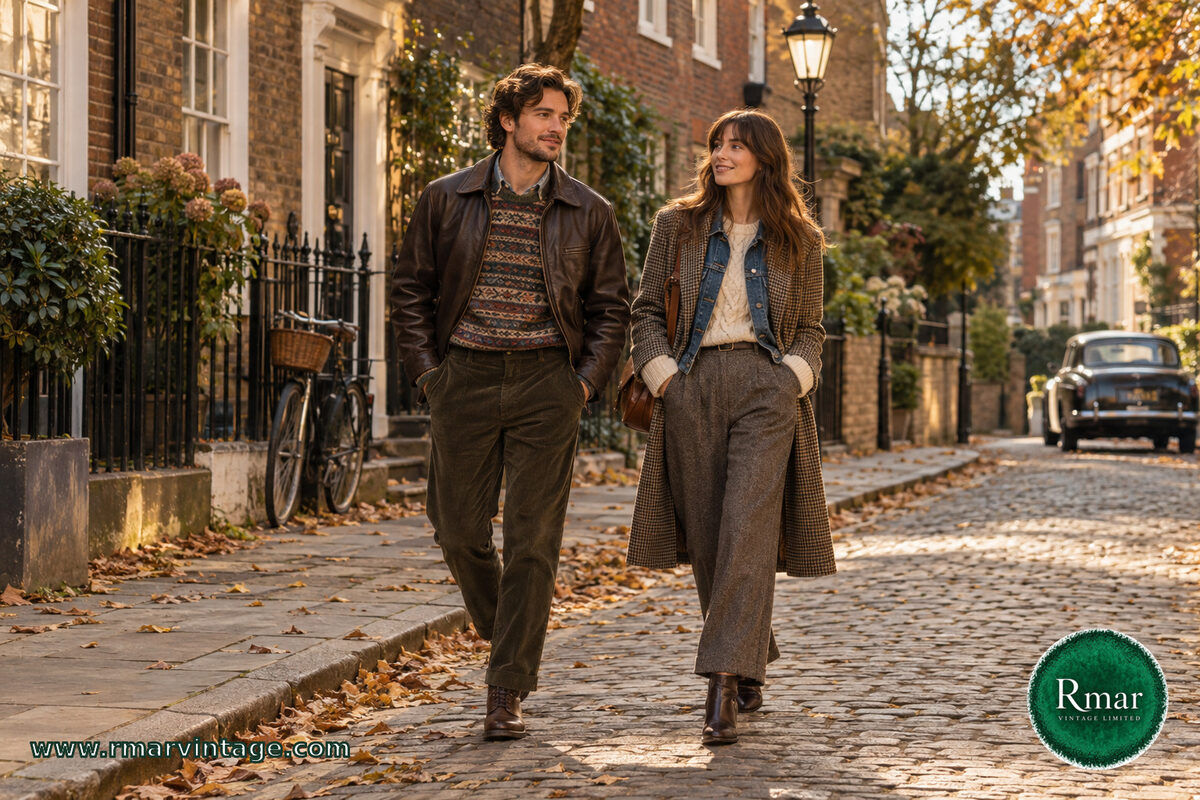
How to Layer Vintage Clothing for Autumn: A Practical Style Guide

Autumn is the ideal season for vintage clothing. Cooler mornings and milder afternoons create space for texture, colour and practical layering without the weight of a full winter wardrobe. The strongest outfits combine useful layers that work together, feel comfortable and can be adjusted throughout the day.
From leather jackets and denim to knitwear, shirts and lightweight coats, vintage pieces often have the substance and character that make layered outfits look naturally collected. The key is choosing the right order, balancing proportions and allowing one piece to lead the look.
Begin with a comfortable base layer
A good autumn outfit starts with something breathable and easy to wear close to the body. A cotton T-shirt, fitted long-sleeve top, fine roll neck or simple shirt gives you a clean foundation without adding unnecessary bulk.
Neutral shades such as cream, white, black, navy and grey are easy to build around, but muted greens, burgundy and warm brown also suit the season. The base layer does not need to be the most noticeable piece; its job is to keep the outfit comfortable and connect the other colours.
Add texture through knitwear
Vintage knitwear is one of the simplest ways to give an autumn outfit depth. A fine jumper works neatly under a jacket, while a chunkier cardigan can become the main outer layer on a dry day. Look for ribbing, cable details, patterned knits and naturally softened fabric.
When the knit is substantial, keep the layers underneath relatively light. If the jumper is close-fitting, you can comfortably add a denim jacket, leather jacket or wool coat on top. Leaving a shirt collar or T-shirt neckline visible helps each layer feel deliberate.
Use denim as the dependable middle layer
A vintage denim jacket is especially useful in changeable weather. It can be worn over a T-shirt early in the season, then used as a middle layer beneath a roomier coat when temperatures fall. Mid-blue, dark indigo, black and washed grey denim all work well with autumn colours.
Double denim can also work when there is enough contrast between the pieces. Pair a lighter jacket with darker jeans, or break up similar washes with visible knitwear and a leather belt. The aim is balance rather than an exact match.
Let a leather jacket anchor the outfit
Leather brings structure to soft autumn layers. A classic brown or black jacket works over knitwear, shirts and casual dresses, while a leather waistcoat can add shape without too much warmth. Natural creasing and gentle wear often give vintage leather its character.
Keep the fit in mind when buying. If you intend to wear a jumper underneath, check the pit-to-pit measurement, shoulder width and sleeve room rather than relying only on the size label. A jacket that fits well over layers will be far more useful throughout the season.
Balance long and short proportions
Layering looks strongest when the lengths work together. A shorter jacket can define the waist over relaxed trousers or a longer skirt, while an overshirt or coat creates a cleaner vertical line. If several layers finish at exactly the same point, the outfit can feel bulky.
Try allowing the base layer to show slightly beneath a jumper, or leave an overshirt open beneath a jacket. Small differences in length make each garment visible and give the whole outfit more movement.
Choose an autumn colour palette
Traditional autumn shades are popular because they combine easily: olive, camel, rust, burgundy, chocolate brown and deep navy all sit naturally beside denim and leather. You do not need to wear them all together. Two or three related colours are usually enough.
A patterned vintage knit or checked shirt can provide the main colour interest. Build the rest of the outfit from quieter shades already present in that pattern. This makes even a bold piece easier to wear.
Finish with practical accessories
Scarves, belts, bags and footwear can connect the layers without overwhelming them. A textured scarf adds warmth and colour, while a leather belt can repeat the tone of boots or a shoulder bag. Retro trainers suit relaxed denim; boots give wider trousers and long coats more weight.
Choose accessories that serve a purpose. Autumn weather changes quickly, so a bag large enough for a removed layer or compact umbrella is often more useful than something purely decorative.
Check condition and measurements before buying
Vintage sizing varies, particularly when garments were originally designed for a different fit. Compare exact measurements with clothing you already own. For jackets and knitwear, check pit-to-pit, shoulder width and length. For trousers, check the laid-flat waist and inside leg.
Examine cuffs, hems, buttons, zips and underarms, as these areas often show the most wear. With knitwear, look for pulls or small holes; with leather, check that the surface remains supple. Honest signs of age can add character, but each piece should still be practical for the way you plan to wear it.
Build outfits you can change during the day
The most successful autumn layers are adaptable. A shirt, fine knit and jacket can be adjusted as temperatures rise and fall, while each garment still works on its own. Avoid creating an outfit that only looks complete when every layer remains in place.
Rmar Vintage Limited selects distinctive pre-owned clothing that can be worn, combined and enjoyed beyond a single season. Start with one strong vintage layer, build around it with comfortable basics, and let the mix of textures and proportions create an individual autumn look.


Comments