How to Mix Vintage and Modern Clothing: 7 Easy Styling Ideas

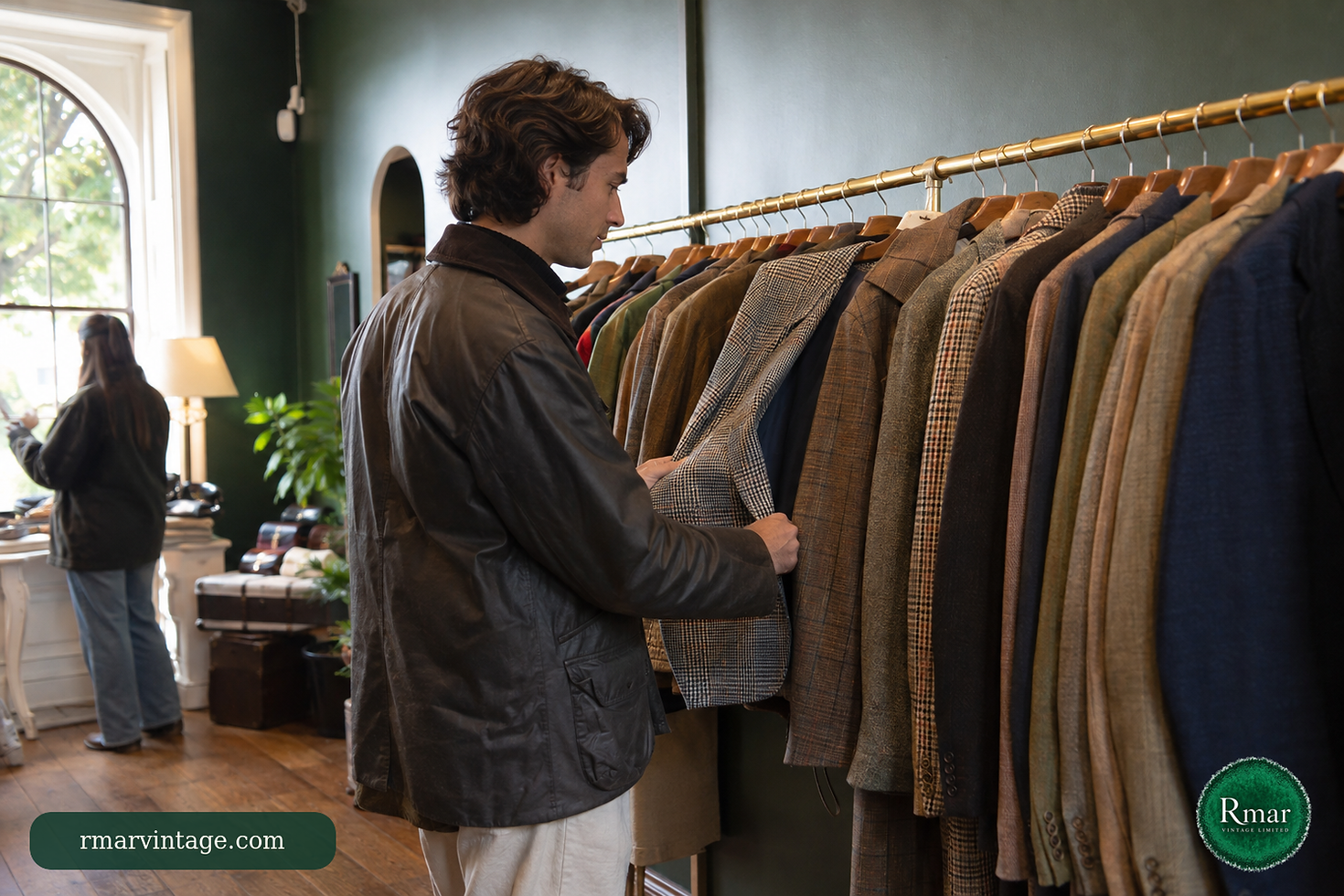
A wardrobe does not need to be entirely vintage to feel distinctive. Mixing one characterful pre-owned piece with familiar modern clothing can make an outfit easier to wear, more personal and more useful from day to day.
RMAR Vintage Limited is a London-based online vintage shop curating pre-owned clothing and distinctive finds for customers across the UK and worldwide through eBay. Here are seven practical ways to combine vintage and modern clothing without making the result feel forced or over-styled.
1. Choose One Vintage Focal Point
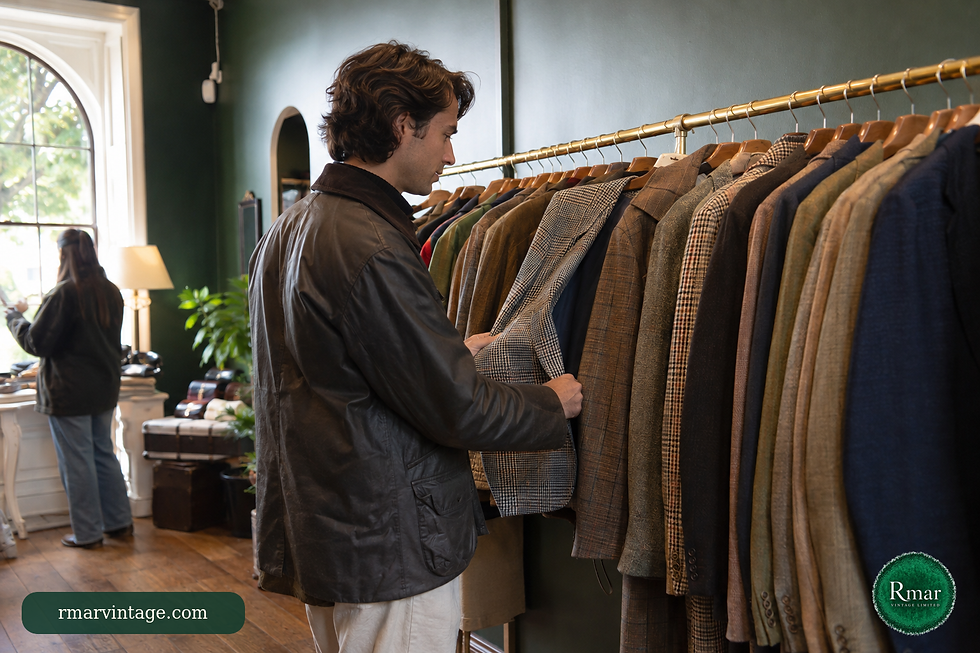
Begin with the piece you most want to wear. It might be a checked jacket, textured cardigan, leather layer, relaxed shirt or pair of jeans. Treat that item as the centre of the outfit and keep the surrounding pieces quieter.
This gives the vintage garment space to show its shape and texture. It also makes styling faster because you are solving one clear question: what helps this piece look its best?
2. Use Modern Basics as a Calm Foundation
Simple modern basics can make a vintage piece feel immediately wearable. Plain T-shirts, fine knitwear, straight trousers and clean footwear create a neutral base without competing for attention.
A vintage jacket over a plain top is an easy example. The contrast between the older garment’s character and the cleaner modern layer keeps the look current while preserving what made the vintage piece interesting.
3. Connect the Outfit Through Colour
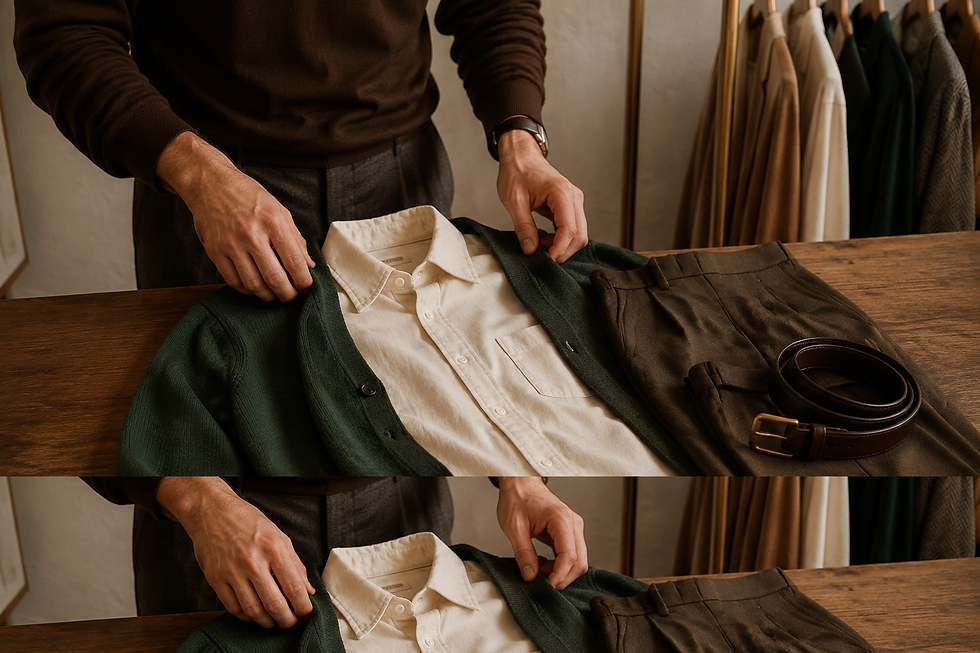
An outfit often feels coherent when one colour appears more than once. You do not need an exact match. A forest-green cardigan can sit comfortably beside olive, cream, brown or charcoal, while a warm checked jacket may work with tan leather or muted trousers.
Choose one main neutral such as cream, navy, brown, grey or black.
Repeat one smaller colour from the vintage pattern elsewhere in the outfit.
Use stronger colour in one place rather than several competing areas.
Consider texture as well as colour when two pieces are close in tone.
4. Balance Shape and Proportion
Vintage cuts may be broader, shorter, longer or more structured than modern equivalents. Instead of judging the garment in isolation, look at the whole silhouette.
A roomy jacket may feel balanced with straighter trousers. A shorter fitted cardigan can work with a higher waist. If both the top and bottom are oversized, a visible waist, rolled cuff or cleaner shoe can add definition.
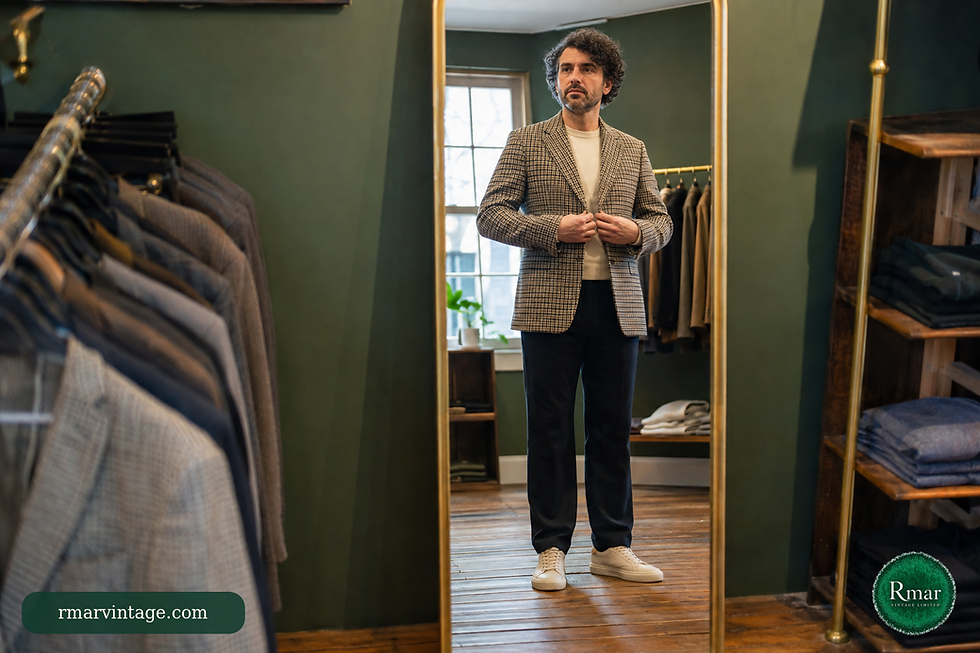
There is no single correct proportion, but each volume should look intentional. Trying the complete outfit together is more useful than deciding from the hanger alone.
5. Let Texture Do Some of the Work
Vintage clothing often brings fabric texture that is difficult to recreate with new basics: softened denim, worn leather, substantial knitwear, corduroy, tweed or a gently faded cotton surface.
Pairing one textured vintage item with smoother modern fabrics creates contrast without needing bright colours or obvious accessories. This is especially useful for simple outfits where the interest comes from materials rather than decoration.
6. Keep Accessories Selective
Accessories can link different periods, but too many strong details may make the outfit feel like costume. Choose one or two pieces that support the clothing, such as a simple belt, understated bag, scarf or clean pair of glasses.
If the vintage garment already has distinctive buttons, a strong collar or a detailed pattern, it may need very little else. Leaving visual space around a good piece is often the most effective styling decision.
7. Make the Outfit Suit Your Real Life
The best mixed wardrobe is one you genuinely use. Think about where you are going, the weather, the amount of movement you need and the clothes you already reach for. A piece that works with several familiar outfits is likely to earn more wear than something bought for one imagined occasion.
For everyday wear, combine one vintage layer with reliable modern basics.
For work, use a vintage jacket or shirt with clean, simple tailoring.
For weekends, relax the shape with denim, knitwear or comfortable footwear.
For evenings, keep the palette controlled and let one texture or pattern lead.
Check Measurements Before Buying Vintage Online
Vintage sizing can differ from modern expectations, so compare the listed measurements with a similar garment you already own. Shoulder width, pit-to-pit, overall length, sleeve length, waist and inside leg can all help you understand how a piece may sit.
Also study the photographs and condition description. Look at the front, back, fastenings, cuffs, hems and any signs of previous wear. A label is only one part of the picture; measurements, cut and fabric behaviour matter just as much.
Build Outfits Before Adding More Pieces
Before buying, imagine at least three combinations using clothing already in your wardrobe. This simple habit encourages thoughtful choices and helps a distinctive vintage find become part of everyday dressing rather than remaining unworn.
A useful wardrobe develops gradually. Each vintage piece can bring something different—shape, texture, colour or history—while modern basics keep the overall collection flexible.
Discover RMAR Vintage Online
RMAR Vintage Limited selects distinctive pre-owned clothing and vintage finds with character, useful design and lasting appeal. Based in London and operating online, RMAR Vintage serves customers across the UK and worldwide through its official eBay shop.


Comments