How to Style Vintage Prints: A Practical Guide

Print can turn a simple outfit into something distinctive, but it does not need to feel loud or difficult to wear. The most useful approach is to treat pattern as part of the outfit’s structure: consider its scale, colours and visual weight, then give it enough calm space to work.
RMAR Vintage Limited is a London-based online vintage shop curating pre-owned clothing and vintage finds for customers across the UK and worldwide through eBay. This practical guide explains how to style vintage prints in a way that feels balanced, modern and personal.
Start With One Printed Piece
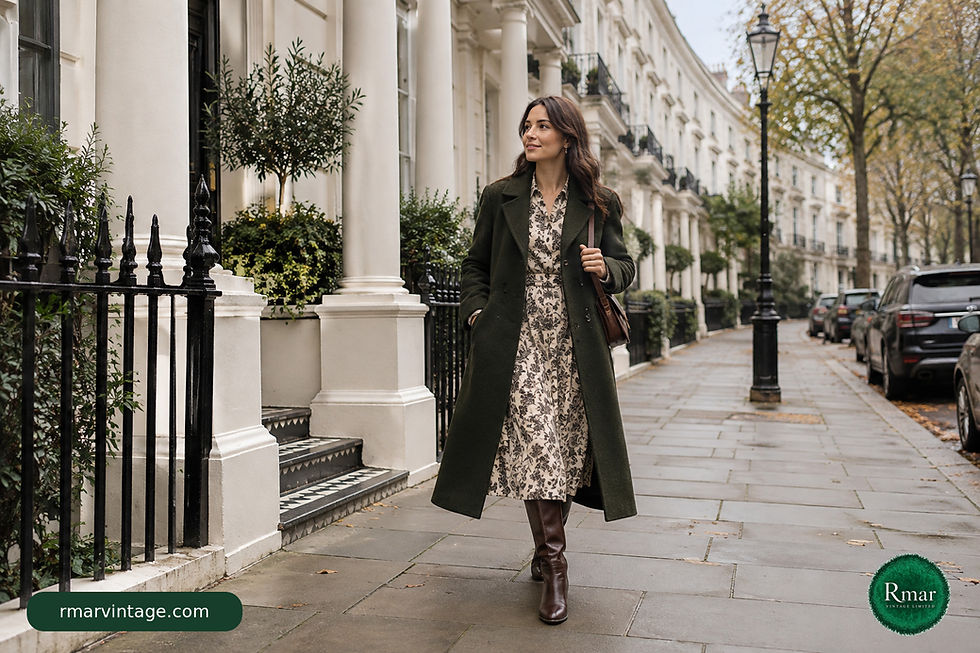
When an outfit feels busy, the usual problem is not the print itself. It is that too many pieces are asking for attention at once. Begin with one patterned garment and build the rest of the look around it.
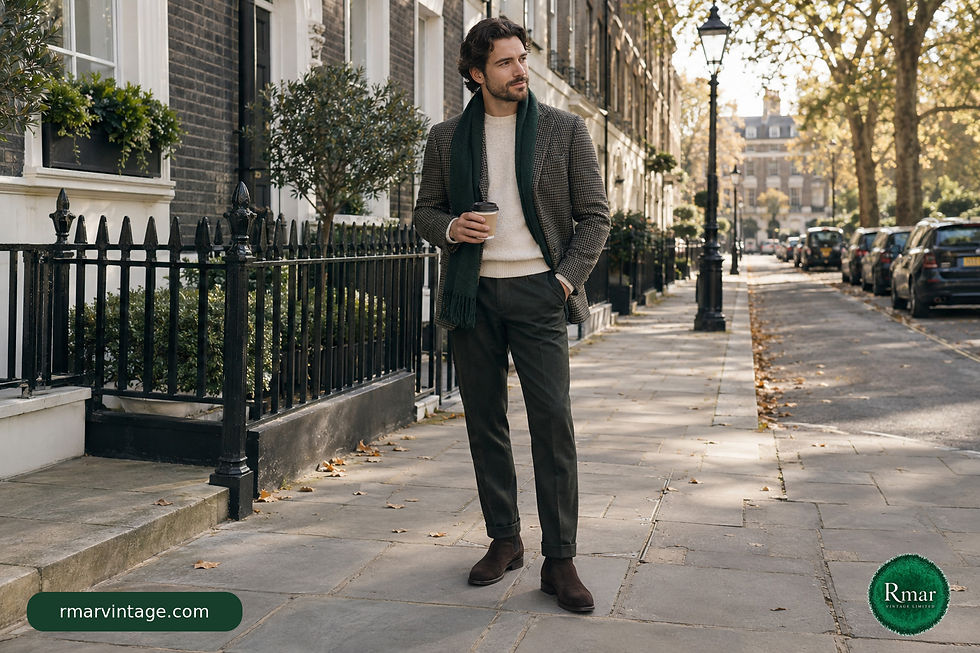
A floral blouse can sit under plain tailoring. A checked jacket can work over a solid knit. A patterned skirt can be grounded with a simple shirt or jumper. This gives the print a clear role and makes the outfit easier to read.
Before adding anything else, look at the garment from a short distance. Notice the first colour you see, the second colour that supports it and the overall mood of the pattern. Those clues make the next choices much simpler.
Use a Colour From Within the Print
One of the most reliable vintage print styling techniques is to repeat a colour already present in the pattern. It creates a connection between the pieces without making them match too precisely.
If a print contains forest green, cream and rust, choose one of those shades for a coat, knit or pair of trousers. The repeated colour acts as a bridge, helping the outfit feel intentional.
You do not need an exact colour match. Nearby tones often look more natural: olive can work with deep green, camel with warm brown, and soft ivory with cream.
Balance Large and Small Patterns
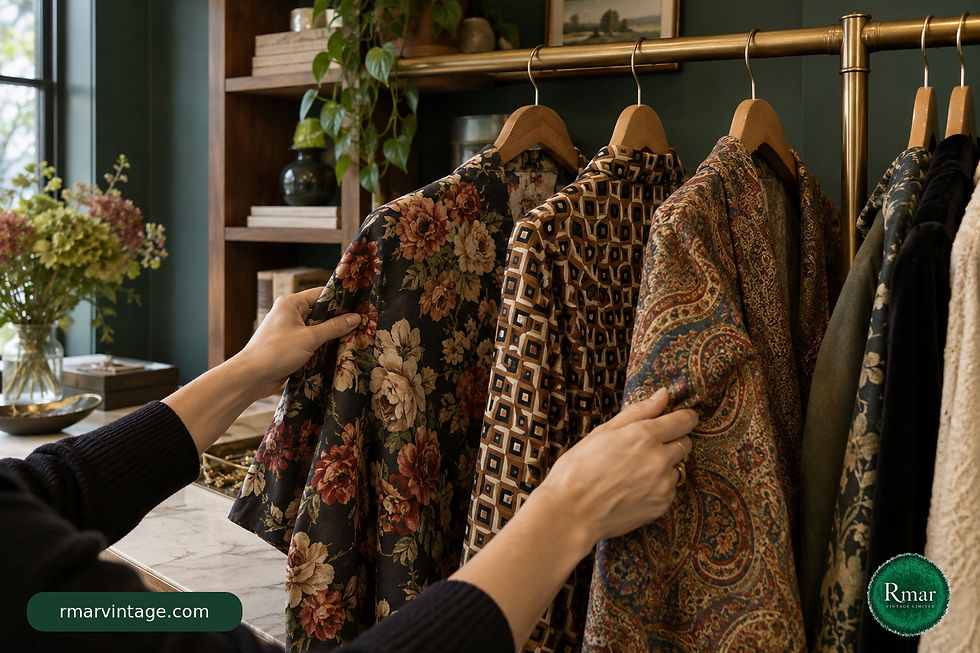
Pattern scale changes how a garment feels. Large florals and broad geometric designs have strong visual presence, while fine checks, narrow stripes and small repeating motifs tend to read more quietly.
If you are new to patterned vintage clothing, begin with a smaller or more evenly spaced print. It can be worn almost like a texture. Larger motifs can be equally versatile when the cut is simple and the rest of the outfit remains restrained.
Also consider where the pattern sits. A printed scarf or blouse keeps the detail close to the face. A patterned skirt anchors the lower half. A fully printed dress creates one continuous statement and often needs very little extra styling.
Let Plain Textures Create Breathing Space
Neutral does not have to mean plain or flat. A cream cable knit, brushed wool coat, corduroy trouser or soft leather accessory can introduce texture while allowing the print to remain the focus.
This is particularly helpful with vintage garments, where fabric character is often part of their appeal. Texture gives an outfit depth without adding another competing design.
Pair florals with plain wool, denim or corduroy.
Use cream, navy, brown, charcoal or forest green as steadying colours.
Keep footwear simple when the garment has a strong all-over print.
Repeat only one or two colours from the pattern.
Allow the shape of the garment to remain visible.
Mix Prints With a Clear Connection
Mixing two prints can work beautifully, but they need a reason to sit together. The safest connection is a shared colour combined with different scales.
For example, a fine striped shirt can work with a larger checked jacket if both contain a similar neutral tone. A small spotted scarf may complement a broad floral dress when one colour appears in both.
Keep one pattern clearly dominant. If two prints are equally bold, the eye has nowhere to rest. Separating them with a plain layer, belt or coat can restore balance.
Pay Attention to Shape and Proportion
A good print can still feel awkward if the proportions are fighting each other. Look at the full silhouette rather than concentrating only on the pattern.
A voluminous printed blouse often works well with cleaner trousers. A flowing skirt can be balanced by a more compact knit. A tailored checked blazer benefits from a simple layer beneath it.
Check Pattern Placement When Buying Vintage Online
Photographs are especially useful when assessing a printed garment online. Look at the full front and back, then examine closer images to understand the fabric and the scale of the design.
Useful details to consider include:
Whether the print is consistent across the garment.
How the pattern sits at seams, pockets and fastenings.
Whether fading or wear is visible in particular areas.
How the colours appear in both wide and close-up photographs.
Whether the supplied measurements suit the intended silhouette.
Vintage sizing can differ from modern sizing, so measurements remain more useful than relying on the label alone. Compare them with a similar garment you already wear comfortably.
Build Outfits That Feel Like You
The best way to wear vintage prints is not to follow a rigid formula. It is to find the level of pattern that feels natural in your own wardrobe.
If you prefer subtle outfits, use a printed scarf, fine check or small motif. If you enjoy stronger looks, make a printed coat, dress or skirt the centre of the outfit. In both cases, thoughtful colour and proportion keep the result wearable.
Choosing pieces that work with clothing you already own also helps a vintage purchase remain useful beyond one occasion.
Explore RMAR Vintage Online
Discover curated vintage clothing and pre-owned finds from RMAR Vintage Limited, based in London and serving the UK and worldwide online.


Comments