
How to Style Vintage Workwear: Practical Layers for Everyday Dressing

Vintage workwear has earned a lasting place in everyday wardrobes because it combines purpose, character and straightforward design. Chore jackets, sturdy overshirts, denim, corduroy and canvas were made to be useful, and that practicality makes them easy to style well beyond their original setting.
Rmar Vintage Limited is a London-based online vintage shop serving customers across the UK and worldwide through eBay. This guide looks at how to style vintage workwear thoughtfully, using proportion, texture and colour without turning an outfit into costume.

Vintage-inspired workwear layers styled for an everyday London setting.
What Makes Vintage Workwear So Wearable?
The appeal of vintage workwear is rooted in honest construction. Patch pockets, reinforced seams, practical fastenings and hard-wearing cloth give each garment a clear purpose. Those details also create visual interest, so even a simple outfit can feel considered.
The most useful pieces are often the least complicated. A chore jacket can replace a casual blazer. A sturdy overshirt can work as a mid-layer. Straight-leg denim and plain knitwear can support a stronger outer layer without competing with it.
Start With a Chore Jacket
A chore jacket is one of the easiest introductions to vintage workwear. Its unstructured shape sits comfortably over a T-shirt, shirt or fine knit, while the large pockets and visible stitching add character.
For a balanced everyday look, pair an olive, navy, brown or faded blue jacket with neutral trousers. If the jacket is boxy, a straighter trouser usually keeps the silhouette clean. If it is longer and more relaxed, try a slightly wider leg so the proportions feel deliberate.
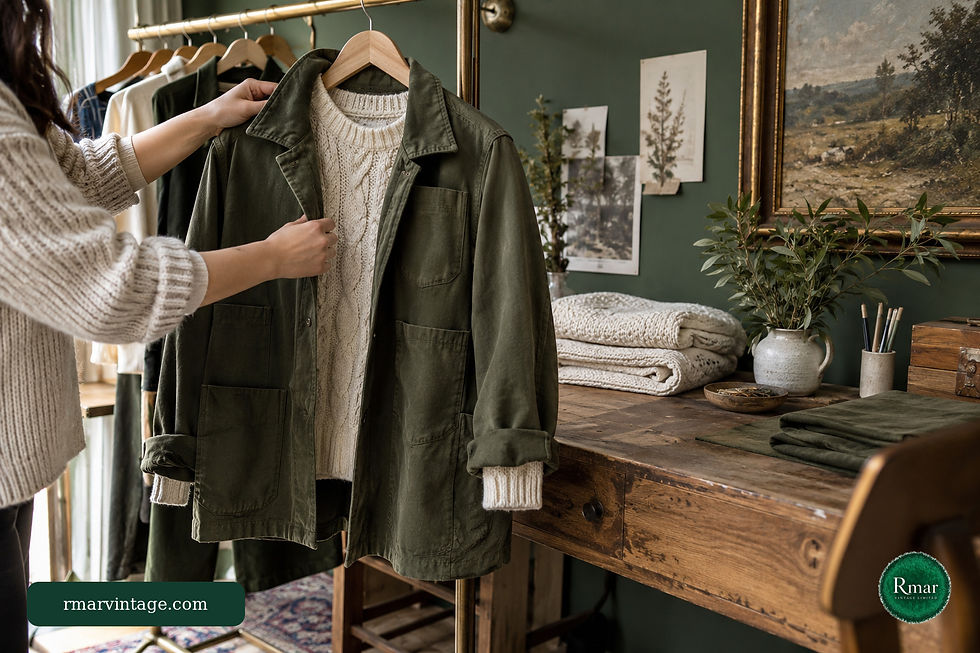
Layering a chore jacket over soft knitwear balances rugged fabric with comfortable texture.
Balance Hard-Wearing Fabrics With Softer Layers
Canvas, denim and corduroy can look heavy when every layer has the same weight. Mixing textures keeps the outfit comfortable and visually lighter. A worn canvas jacket works well over brushed cotton, fine wool or a soft jersey top. Denim can be softened with cream knitwear, while corduroy pairs naturally with chambray or a plain cotton shirt.
It also helps to leave some contrast between colours. Dark navy over mid-blue denim may blend together, while navy with ecru, rust or soft grey creates clearer separation.
Get the Proportions Right
Vintage sizing is not always comparable with modern labels, so concentrate on measurements and shape. For jackets, check pit to pit, shoulder width, sleeve length and overall length. Compare those figures with a garment you already wear comfortably.
A work jacket does not need to fit closely, but the shoulder and sleeve length should still suit the intended look. Allow extra room if it will be worn over knitwear. For trousers, compare waist, rise, inside leg and hem width; these measurements reveal far more than the size on an older label.
Look Closely at Construction and Condition
Workwear often looks better with natural fading, softened fabric and small signs of previous use. These details can show how a garment has aged, but condition still matters.
Check high-stress areas such as cuffs, elbows, pocket corners, buttonholes and underarms. On trousers, look carefully at the seat, knees, hems and waistband. Secure stitching and sound fabric are more important than perfect newness, and any repair or visible wear should be clearly shown in photographs.

Cuffs, pockets and seams are useful places to assess the construction and condition of vintage workwear.
Use Workwear Colours Without Looking Uniform
Traditional workwear colours are easy to combine: olive, navy, indigo, tan, tobacco brown, cream and charcoal all sit comfortably together. The key is to vary the tone and texture.
Try one main workwear piece rather than matching everything. An olive jacket with dark trousers and a cream knit feels relaxed and modern. A denim chore coat over a rust-coloured layer adds warmth without becoming overly themed. Accessories can remain simple: a plain leather belt, practical boots or understated trainers are usually enough.
Buying Vintage Workwear Online
When shopping online, use the full listing rather than relying on the first photograph. Look for front and back views, close-ups of fabric and fastenings, and clear images of any wear. Read the condition description and compare the supplied measurements with your own clothing.
Because vintage garments have already had a life, small variations in colour, texture and construction are part of their character. A careful listing should make those qualities visible and help you decide whether the piece fits your wardrobe and how you intend to wear it.
Discover Vintage Workwear and Everyday Layers Online
Explore the latest RMAR Vintage collections for distinctive pre-owned clothing and useful wardrobe layers.
You can also shop through the official RMAR Vintage eBay store, serving customers across the UK and worldwide.


Comments