
How to Store Vintage Knitwear Without Stretching It

Vintage knitwear rewards careful handling. A well-made jumper or cardigan can remain a pleasure to wear for years, but hanging, damp storage and hurried folding can pull it out of shape. The good news is that a simple routine makes a noticeable difference.
This practical guide explains how to clean, fold and store pre-owned knitwear without stretching it, while keeping pieces easy to inspect and ready for their next season.
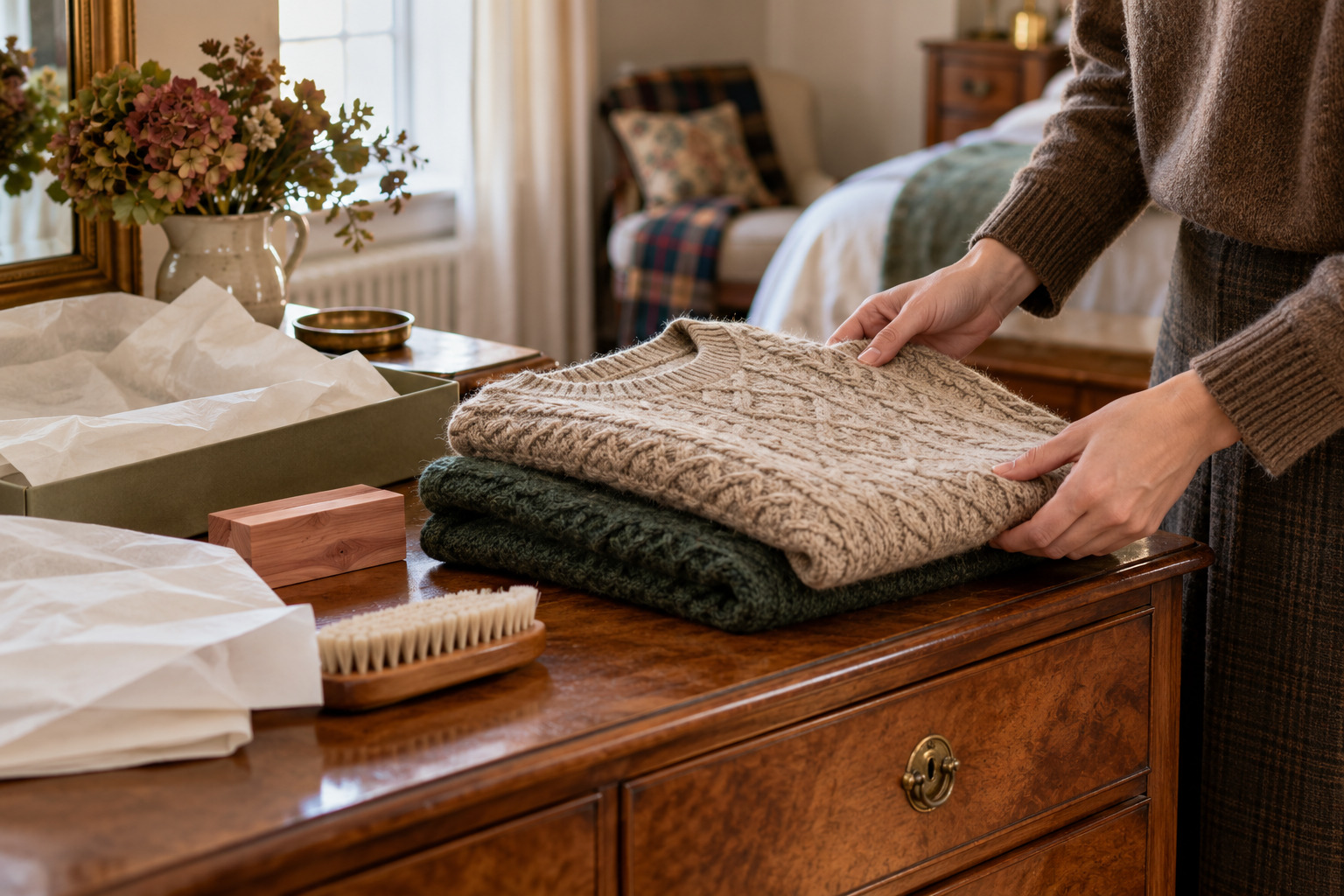
Why vintage knitwear loses its shape
Knitted fabric is made from interlocking loops, so it behaves differently from a tightly woven cloth. Gravity can lengthen the body and sleeves when a heavy piece hangs for weeks. Narrow hangers may also leave bumps at the shoulders, while a tightly packed rail can crease or distort the surface.
Age alone does not make a garment fragile, but previous wear, repairs and changes in tension all deserve attention. Handle the whole garment rather than lifting it by one sleeve or the neckline, and support its weight when moving it.
Prepare knitwear before storage
Read the care label and inspect the garment
Start with the care information attached to the piece, when present. Different fibres, blends, trims and constructions can need different treatment, so a single washing rule is not suitable for every vintage garment. Check cuffs, underarms, seams, buttons and repaired areas before cleaning or putting the item away.
Empty every pocket and remove detachable accessories that could press into the knit. Deal with loose threads carefully rather than pulling them. If you are unsure how to clean a delicate or unusual piece, seek specialist advice before experimenting.
Store only when completely dry
Moisture encourages odours and can damage fibres over time. After cleaning, allow knitwear to dry fully according to its care instructions. Do not judge dryness only by the surface; thicker cuffs, hems and folded areas may take longer. Storage should begin only when the whole piece feels dry and has returned to room temperature.
Fold knitwear instead of hanging it
Lay the garment on a clean, flat surface. Smooth it gently without pulling. Bring each sleeve across the body, fold the sides inward if needed, then fold from the hem towards the shoulders. Aim for a compact rectangle that fits its shelf or box without compression.
Place the folded piece flat rather than standing it on an edge. Keep stacks low enough that the bottom garment is not crushed. Heavier knits belong underneath lighter ones. Acid-free tissue can soften a sharp fold on a particularly delicate piece, but avoid overstuffing it between layers.
Choose breathable, calm storage
A cool, dry, clean cupboard or drawer is usually a sensible choice. Keep garments away from direct sunlight, radiators, damp walls and places with large temperature swings. Breathable boxes or clean cotton storage bags are often easier on knitwear than long-term airtight compression, which can force deep creases and hides changes until the bag is opened.
Do not place bare wood, strongly scented products or coloured paper directly against an unknown fabric. If using a cedar block, keep it beside the garment rather than rubbing it on the knit. Whatever storage method you choose, make sure you can open it and inspect the contents without dismantling the whole wardrobe.
Make routine checks
Every few weeks or at the change of season, lift and refold stored knitwear along different lines. Look for fresh holes, surface debris, odour or dampness. Vacuum and wipe the surrounding storage area as appropriate, and address any sign of moth activity promptly. Regular inspection is more useful than relying on a scent alone.
Bring stored knitwear back into wear
When the weather changes, unfold the garment and let it rest flat. A gentle airing can release storage creases. Recheck closures and seams before dressing, and avoid tugging a piece into shape while wearing it. If it needs attention, support it on a flat surface while you work.
Thoughtful storage is part of buying pre-owned well: it protects the work already invested in a garment and helps a distinctive piece stay wearable rather than becoming forgotten at the back of a wardrobe.
Explore more vintage and pre-owned style
Browse the RMAR Vintage shop collections for more vintage and pre-owned inspiration, or visit the RMAR eBay shop.


Comments