Vintage Denim Fit Guide: Choosing Jeans Online

Updated: Sep 3
Finding vintage denim online can be rewarding, but the number on the label is only one part of the fit. Different cuts, manufacturing periods and previous wear can all change how a pair of jeans sits on the body.
This vintage denim fit guide explains the measurements, shapes and listing details that help buyers make a more informed choice. Rmar Vintage Limited is a London-based online vintage shop serving customers across the UK and worldwide through eBay.
Why Vintage Jeans Sizing Can Be Different
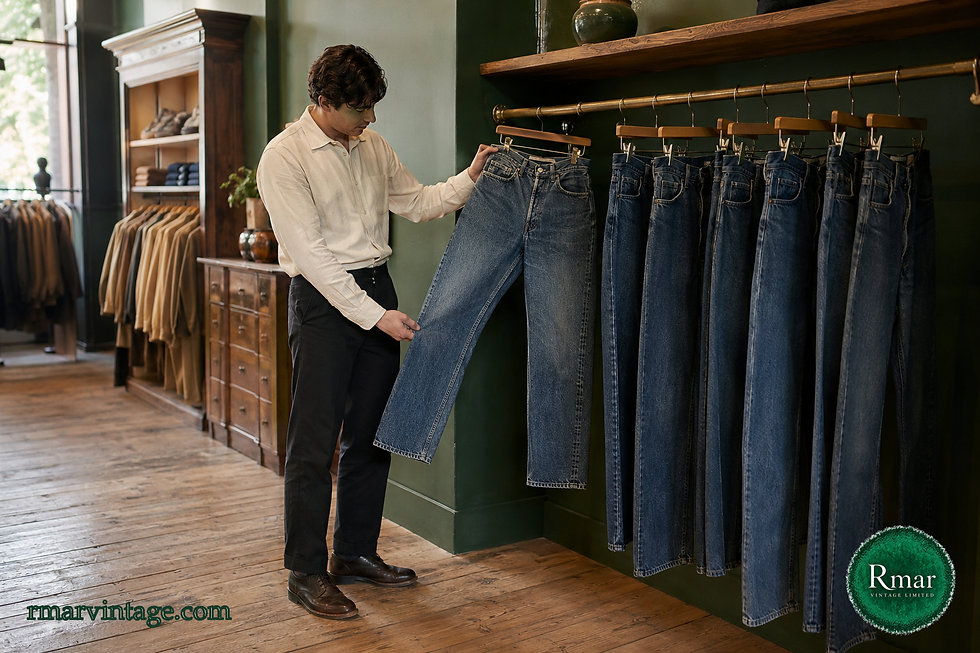
A labelled waist size does not always match the garment's current measurement. Sizing conventions vary, and denim can shrink, stretch or soften through wear and washing. Two pairs carrying the same label may therefore fit very differently.
Measurements are most useful when they are compared with a pair of jeans you already own and enjoy wearing. Use the same measuring method on both garments so the comparison remains consistent.
Begin With the Waist Laid Flat
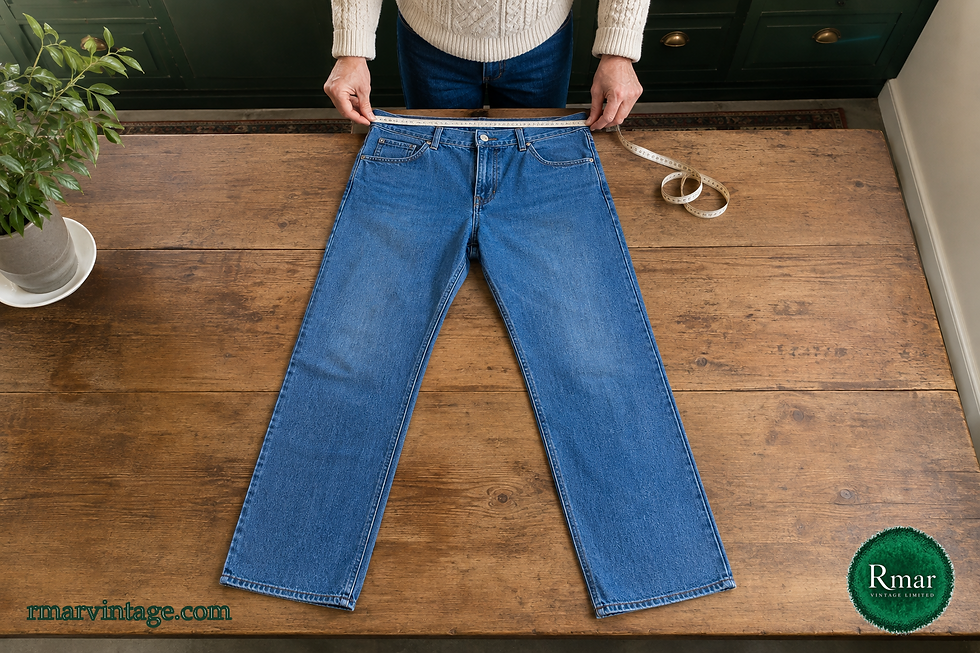
Fasten the jeans, smooth the waistband without stretching it and measure straight across from one side to the other. This gives the laid-flat waist measurement.
If you want the approximate waistband circumference, double that figure. Remember that this is a garment measurement rather than a body measurement, and the position of the waistband depends on the rise.
Check the Rise Before Judging the Waist
The rise is the distance from the crotch seam to the top of the waistband. It affects where the jeans sit and can change how a waist measurement feels when worn.
A higher rise generally sits closer to the natural waist, while a lower rise sits nearer the hips. The exact fit also depends on the shape through the seat and the construction of the waistband.
Measure the Inside Leg
The inside leg is measured from the crotch seam down the inner seam to the hem. Compare this with the inside leg of your best-fitting jeans rather than relying only on your usual trouser size.
Consider how you plan to wear the jeans. Some buyers prefer a clean break above the shoe, while others like extra length for a turn-up or a fuller break.
Useful Extra Denim Measurements
When available, several additional measurements can give a clearer picture of the shape:
Front rise, measured from the crotch seam to the top of the front waistband.
Back rise, measured from the crotch seam to the top of the rear waistband.
Thigh width, measured across the leg just below the crotch.
Hem opening, measured straight across the bottom of one leg.
Overall length, measured from the top of the waistband to the hem.
Sellers may use slightly different methods, so read the listing carefully and use the photographs to understand where each measurement has been taken.
Understand Common Vintage Denim Leg Shapes
Fit names are useful starting points, but they are not universal. The actual measurements and photographs matter more than the wording alone.
Straight leg: a relatively consistent width from thigh towards hem.
Tapered leg: narrows more noticeably towards the ankle.
Relaxed fit: offers additional room through the seat and thigh.
Wide leg: keeps a fuller shape through much of the leg.
Bootcut or flared shape: becomes wider below the knee.

Look Beyond the Front Photograph
A useful online listing should show the front and back, the waistband, pockets, hems, fastenings and any areas of visible wear. Close-up images help reveal denim texture, fading and repairs.
Natural fading and softened fabric can be part of the appeal of pre-owned denim. However, buyers should also look for thinning around the crotch, opening seams, damaged fastenings or heavy wear at the hems.
Consider Fabric Feel and Previous Wear
Some denim feels rigid and structured, while other denim has softened through use. A softer pair may feel more relaxed, whereas heavier denim can hold a stronger silhouette.
Photographs cannot communicate everything about fabric feel, so use the description alongside the images. Avoid assuming stretch content, fibre composition or weight unless the listing or visible care label confirms it.
Compare With Jeans You Already Own
The most dependable reference is usually a garment rather than a body measurement. Lay a well-fitting pair flat, fasten it and record the same measurements shown in the listing.
Compare the waist using the same laid-flat method.
Check the front rise to understand where the waistband will sit.
Compare the thigh if you need more or less room.
Match the inside leg and hem width to the finish you prefer.
Use overall length as a final sense check.
Choose Denim for Your Wardrobe
Colour and shape should work with clothing you already wear. Mid-blue denim is versatile, darker denim can look more structured and naturally faded denim brings visible character.
A useful pair of vintage jeans should offer more than one outfit. Consider whether the cut works with your usual knitwear, shirts, jackets, coats and footwear before making a decision.
Buying Vintage Denim Online With Confidence
Before purchasing, review every photograph, compare the measurements and read the condition description. If an important detail is not shown, use the available seller contact options to ask before buying.
Rmar Vintage Limited curates distinctive pre-owned clothing and vintage finds for online shoppers in London, across the UK and worldwide. Each item should be considered through its individual listing, photographs, measurements and condition details.

Discover Vintage Denim and Clothing
Explore Rmar Vintage collections online or visit the official eBay shop to discover distinctive pre-owned pieces.


Comments